A Billion Dollar Mistake: Why You Can’t Ignore Job Descriptions in an AI World

Last time updated: September 28, 2026
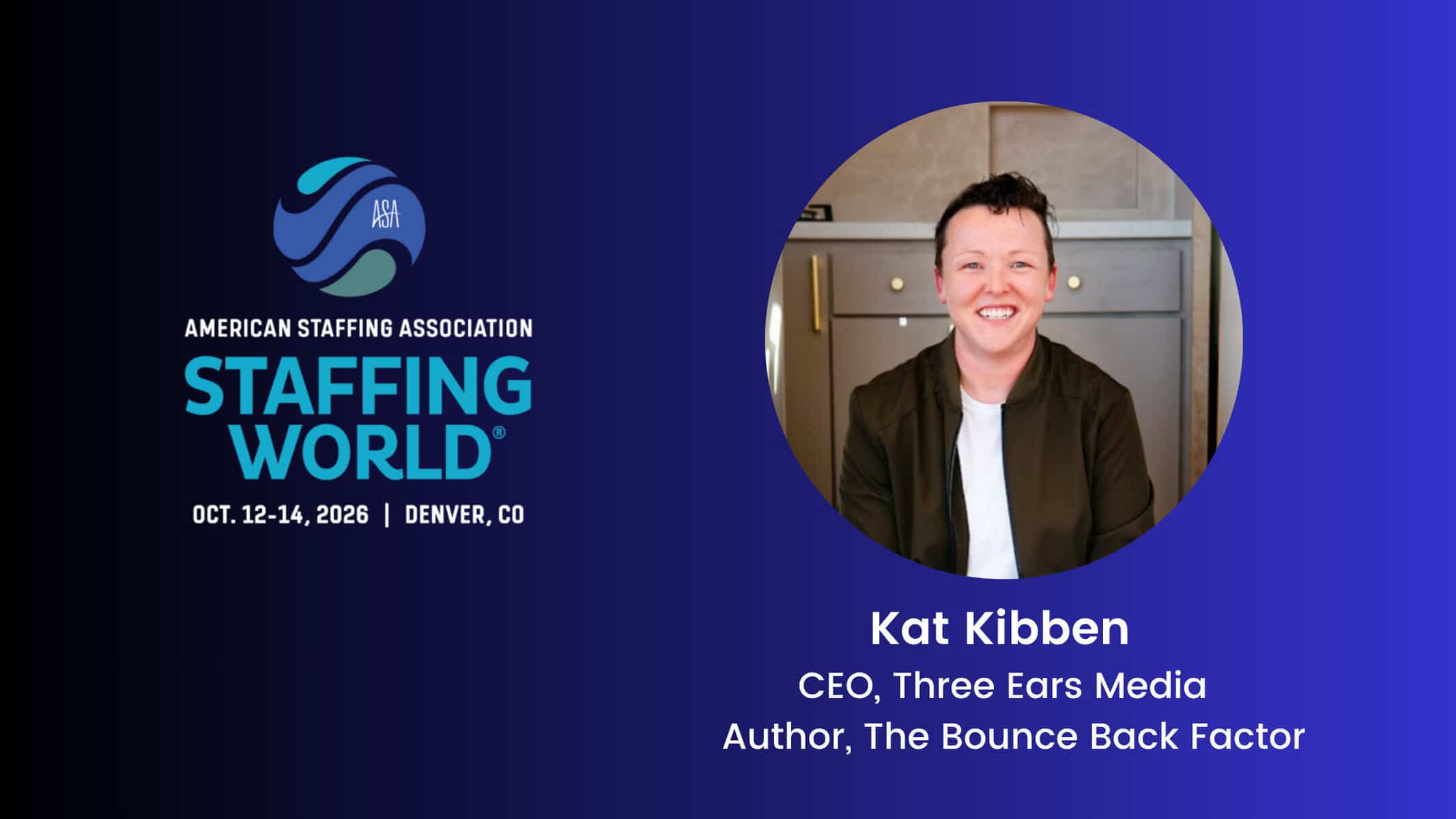
Staffing World Breakout Session | Tuesday, Oct. 13 | 4 pm – 5 pm
AI is a massive topic in staffing right now. Many companies are happy to pour money into initiatives, but so far aren’t seeing much of a return on investment. MIT recently reported that a jaw-dropping 95% of generative AI pilots fail to deliver a measurable impact on profit, despite $30-40 billion in enterprise spending.


But it doesn’t have to be this way, says Kat Kibben, CEO of Three Ears Media and published author. A recognized expert on recruiting and talent attraction, Kibben has spent years advising staffing agencies on how to get better outcomes.
In their upcoming talk at Staffing World, Kibben will explain in detail that AI tools are only as good as the data they’re fed, and most job descriptions are treated as afterthoughts, leading to wasted investment and poor results. We interviewed Kibben to get a preview of their talk and some practical, actionable steps to fix this problem.
Garbage In, Garbage Out
When it comes to AI recruiting tools, Kibben says that the technology isn’t the problem – it’s the data going into it.
“Everyone is reading headlines about how much money we’re spending on AI. But if you really pay attention to the subheadlines, everyone is talking about how much money is being wasted. And I think the reason why is because we have not looked at our foundational data.”
Kibben says that AI should be viewed as a building block tool, and that you have to define what ‘good’ means in order for AI to execute that process successfully.
“The fundamental building block of recruiting, of defining what good means, is the job posting.”
Copy and Paste Culture
Kibben argues that many staffing companies are treating job postings as an afterthought and simply taking the easy way: copying old postings, borrowing from competitors, or using generic templates.
And the results are clear: lower quality candidates, increased time-to-fill, and worst of all: failing to reach the final stage of the interview process.
“It’s a little funny because we say out of one side of our mouth that we want to be unique and that we have to stand out, and then on the other side of our mouth, we go and copy and paste what everyone else is doing,” says Kibben. “But if we slow down and work to create a description that’s actually unique to the role, the outcomes are going to be so much better.”
Feeding the Machine
The goal of a good AI job description, says Kibben, is to define “good” so clearly that even a machine can understand it. They argue that common criteria like years of experience or specific degrees are lazy benchmarks that are poor predictors of success.
“Let me give you an example: ‘five years of experience.’ It’s a false premise for what qualified means, because while it tells you how long someone did something, it doesn’t tell you what they did. Five years at a staffing agency with 10,000 employees and five years at a staffing agency with 10 employees are two different jobs with totally different experiences. If you feed five years of experience into AI, it will find you five years of experience. But that’s not what you’re looking for.”
Getting the required information starts with the intake process with a hiring manager. And after over 1,000 meetings with hiring managers, Kibben has streamlined the process down to 30 minutes or less.
“My intake process is hyper-specialized and built around imagining a day in the life and then using your detective skills to figure out what you have to know in order to be able to do it. It helps you have conversations with people who have task-level understanding of the job and get the intel you need to improve job descriptions.”
Kibben notes that while 30 minutes up front might seem like a lot for overburdened hiring managers, this method consistently saves about three hours later in the process.
Getting Started
A simple way to get started on improving job postings immediately is to train your team on how to run a proper intake meeting, update the mandatory requirements you plug into AI sourcing tools, and get some good templates for writing job postings to create consistency.
“I don’t recommend anything in my talk that you couldn’t start tomorrow. It doesn’t have to be complicated to get it right. A few simple tweaks are going to produce higher quality results. If you put into place some really basic systems that say ‘this is what good means’, then you can deploy your team to actually go and execute.”
And from there, says Kibben, it becomes part of your competitive advantage.
“From the sales conversation on, your team can confidently speak to your deep understanding of the job and how you market it.”
And if you attend their talk at Staffing World, expect to leave with many templates, tools and tips to get started – and a clear business case for how to stop wasting money and start gaining real value from AI.
“Because for the world of staffing, this is both a billion dollar problem and the reason that your AI investments fall flat. But it’s also a really easy way to stand out without spending any dollars.”
Thank you to Kat Kibben for the great conversation! You can catch their breakout session “A Billion Dollar Mistake: Why You Can’t Ignore Job Descriptions in an AI World” on Tuesday, Oct. 13, from 4 to 5 p.m.
Speaker Bio:
Kibben is a leadership speaker, LinkedIn Top Voice, and founder of Three Ears Media, known for transforming how companies attract great talent and build healthy team culture. With more than 15 years of experience at globally recognized brands including Monster.com and Randstad Worldwide, Kibben shares weekly reflections on leadership, work, and well-being at katrinakibben.com. Featured in The New York Times and Forbes, Kibben is also the author of This Was All An Accident and The Bounce Back Factor: The Leader’s Guide to Liking Yourself While Leading Your People.
Up Next





Read More Insights from Elle Jackson
-

No One Wants to Talk to You; Here’s How to Get the Sale Anyway
When it comes to staffing sales these days, no one wants to talk to you. Here’s how to win business anyway. This article is a preview of a panel at Staffing World that distills candid advice from experts on how to win business in a difficult sales environment. -
Clarity Beats Chaos: How High-Performing Staffing Teams Stay Focused Under Pressure
This article interviews high-powered staffing leaders on practical strategies to move from chaos to clarity, drive real progress, and build a culture of accountable performance. (Preview of a Staffing World 2026 panel) -

The Practical AI Playbook for Staffing Firm Leaders
In this webinar replay, marketing and AI expert Jeff Staats offers a free educational webinar designed specifically for staffing firm leaders who want to leverage AI with confidence—not confusion. In this webinar recording, you’ll learn how to cut through the noise and identify practical ways AI can help your team work smarter, improve efficiency, and… -

What You Need to Know About California Senate Bill 1032 – the SAFE Act (SB 1032)
Everything you need to know about California Senate Bill 1032, also known as the SAFE Act, and how it impacts staffing agencies in CA.